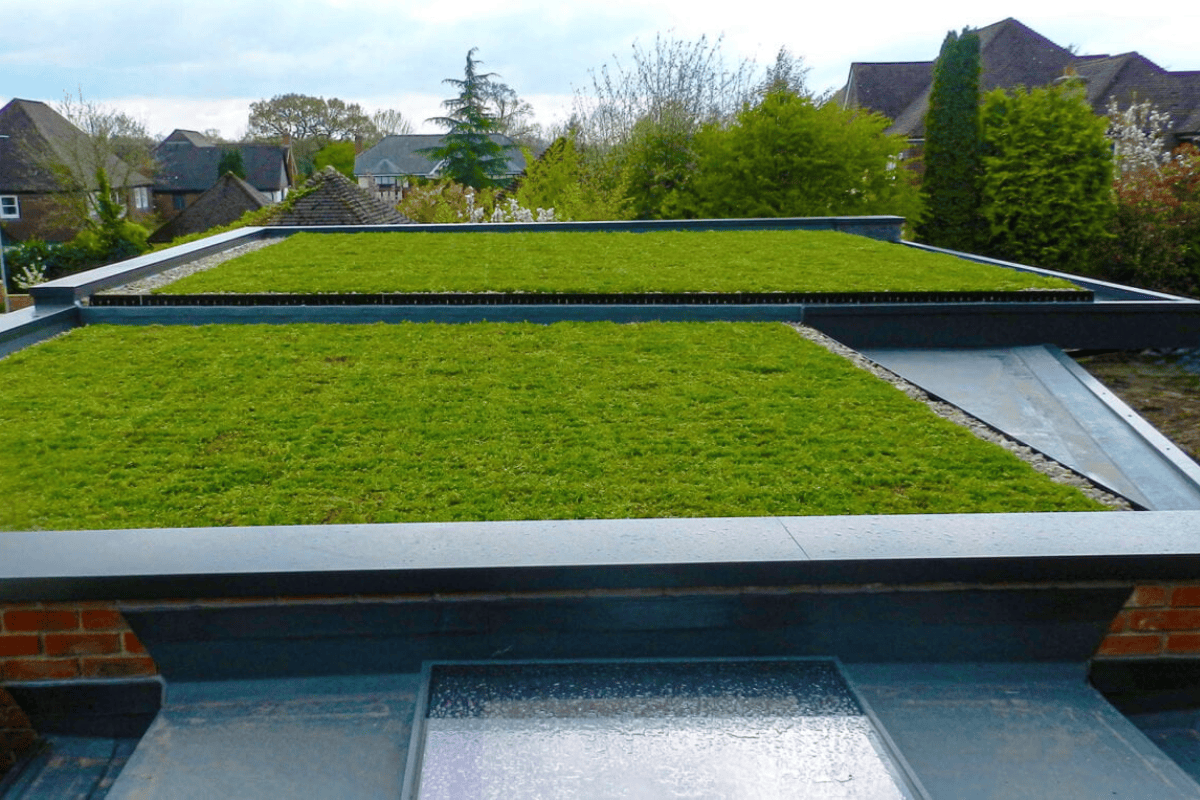
Green roofs, also known as living roofs, play a significant role in sustainable architecture from energy conservation to habitat creation. Our Architect and Certified Passivhaus Designer, Rachel, has pulled together some key drivers in the motivation behind choosing green roofs.
Green roofs can be categorised into three types: extensive, semi-intensive, or intensive; each varying in depth, maintenance, and vegetation diversity. Green roofs all contribute to a building’s overall energy efficiency and environmental impact reduction. They benefit the wider environment through their positive impact on sustainability and biodiversity, and they create visual enhancement of the landscape with the possibility of planning gain. They can also have long term financial benefits.
The key benefits of green roofs in sustainable architecture are:
- Temperature regulation: Vegetation on the roof absorbs heat and releases it slowly, reducing the urban heat island effect. Its thermal mass also helps reduce the amount of solar heat entering a building through the roof, and provides a good level of insulation reducing the buildings heating and cooling needs required to keep the temperature at a suitable level and therefore contributing to energy savings.
- Sustainable drainage and stormwater management: Green roofs can absorb large amounts of rainwater and then release it gradually, reducing stormwater runoff and strain on drainage systems, mitigating flooding risks.
- Improved air and water quality: Green roofs filter airborne pollutants, contributing to cleaner air in urban areas. The vegetation can filter out airborne particulates as the air passes over the plants. They are then held within the green roof substrates and are prevented from contaminating water supplies.
- Health: Plants can supply benefits such as more oxygen, better air filtration and humidity control but there are also therapeutic benefits associated with the mixture of smells, colours, sounds and movement created by plants and their associated fauna, which can reduce stress, lower blood pressure, relieve muscle tension and increase positive feelings.
- Biodiversity enhancement: Green roofs can provide habitats for insects, birds, and other small wildlife, supporting urban biodiversity and/ or recreate habitats that are lost during development.
- Aesthetic appeal: Green roofs can enhance the visual appearance of buildings and provide a connection to nature in urban environments, as well as promoting well-being. They are very likely to be seen as a positive selling point for developers wishing to sell property to potential buyers.
- Recreational spaces: Green roofs can provide usable spaces for people where there is little available at ground level. Green roofs designed as recreational areas have the advantage that access to them can be controlled making the space less prone to vandalism and other anti-social issues which can be commonplace in public spaces at ground level.
- Longevity of Roofing Membranes: Ultraviolet radiation falling upon certain waterproofing membranes can change its characteristics and accelerate the aging process. However, in a green roof the membrane is buried below the growing medium and drainage layer so this premature ageing cannot take place and thereby extending the life of the membrane.
- Quieter Buildings: Hard roof surfaces tend to reflect sound, rather than absorb it. Green roofs absorb sound through the substrate, drainage and vegetation layers. Buildings such as schools, hospitals and offices could benefit from the noise reduction properties of green roofs.
- Green Roofs and Solar Power: Photovoltaic (PV) panels work more efficiently at a set operating temperature. Once there is a deviation either above or below this level, the electricity generation becomes less efficient. As a green roof is able to maintain a more constant temperature with less daily fluctuations, the PV panels are able to work more efficiently throughout the day.
As you can see, there are many advantages to green roofs. If this is something that you would like to incorporate into your next project, do reach out to our low energy expert, Rachel, here. We look forward to talking with you soon.