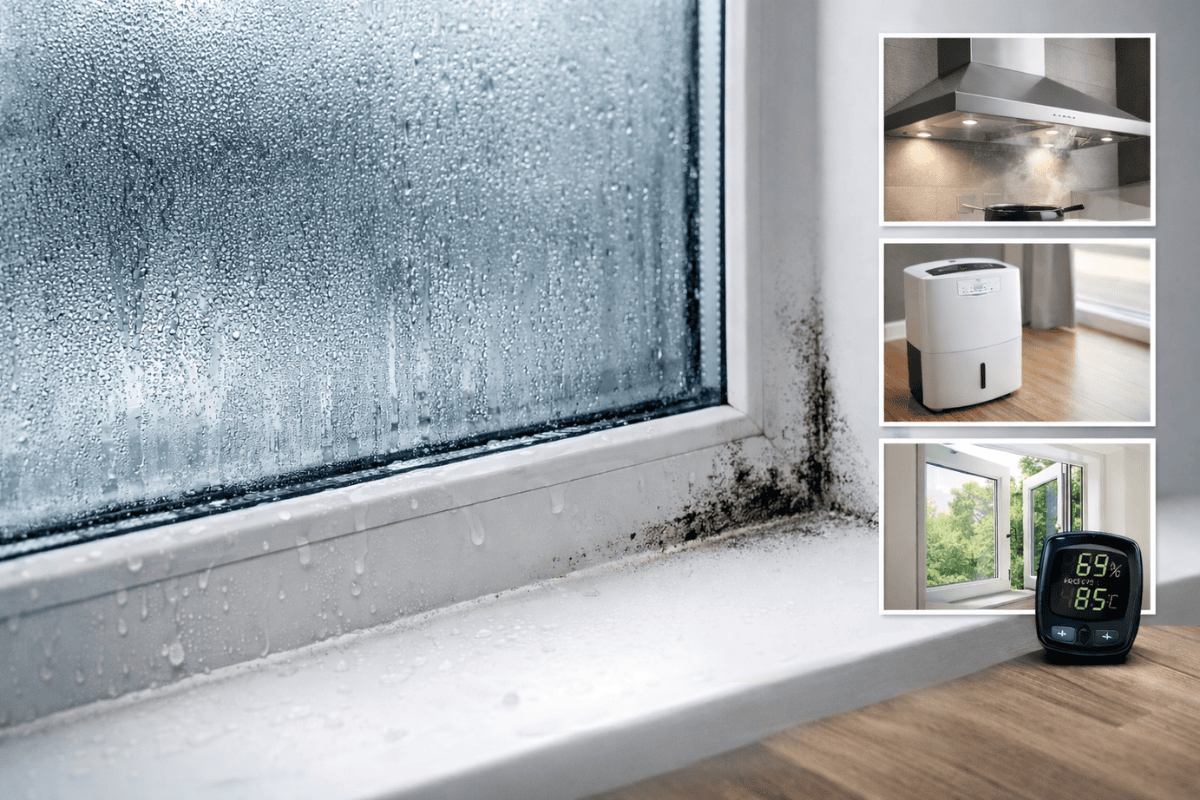
We are increasingly asked about condensation and mould appearing in buildings, often around window reveals, external doors, rooflights and in the corners of rooms. This is frequently accompanied by noticeable condensation on double-glazed windows, particularly during the colder months.
The reassuring news is that this is a very common issue in modern, well-insulated homes and, importantly, one that can usually be resolved with relatively straightforward measures.
In most cases, the windows themselves are not the problem. Instead, condensation and mould are typically caused by a build-up of moisture in the air combined with insufficient background ventilation. Modern homes are far more airtight and thermally efficient than older buildings. While this is excellent for energy performance, it does mean that moisture generated by everyday living can become trapped indoors.
Activities such as cooking, showering, bathing and even breathing release water vapour into the air. Warm air can hold a significant amount of moisture, which remains invisible until it meets a cooler surface, such as glass, window frames or poorly ventilated corners, where it condenses. A small amount of condensation at the base of a double-glazed window can be normal, but persistent or heavy condensation is a sign that moisture levels are too high.
Reducing Moisture at Source
The first step is to reduce the amount of water vapour being generated and retained within the home. Practical measures include:
- Using extractor fans consistently when cooking and showering, and allowing them to run on afterwards
- Purge ventilating bathrooms after showers or baths by briefly opening a window
- Ensuring cooker hoods extract to the outside rather than recirculating air internally
- Avoiding drying clothes indoors where possible, or using vented, condenser or heat-pump tumble dryers
- Keeping internal doors closed when cooking or showering to limit moisture spreading through the house
- Maintaining a steady internal temperature, as cooler surfaces are more prone to condensation
- Using a dehumidifier during winter or prolonged wet weather, noting that this treats the symptoms rather than the cause
The Importance of Background Ventilation
Alongside moisture control, good background ventilation is essential. This may include ensuring window trickle vents are open and unobstructed, installing or upgrading kitchen and bathroom extract fans, and using fans with humidity sensors that respond automatically when moisture levels rise.
While improved ventilation can introduce some limited and unavoidable drafts, it plays a critical role in maintaining healthy indoor air quality and preventing mould growth.
Further Solutions
If simpler measures do not fully resolve the issue, in-wall mechanical ventilation with heat recovery can be an effective next step. These systems provide a continuous supply of fresh air while retaining most of the heat from the outgoing air, making them highly energy efficient and well suited to occupied homes.
It is also worth noting that in many Scandinavian countries it is common practice to purge ventilate homes once a day, often first thing in the morning, by briefly opening several windows at once. While this temporarily cools the air inside, the effect is short lived because most of the heat in a building is stored in the fabric of the walls, floors and furniture rather than in the air itself.
A Positive Outlook
Condensation and mould are often symptoms of a home performing well thermally but lacking sufficient ventilation. With the right balance, it is entirely possible to improve air quality, reduce condensation and prevent mould from developing further.
If issues persist despite these measures, professional advice can be sought. A building professional can assess moisture levels, ventilation and overall building performance, and recommend appropriate, proportionate solutions tailored to the specific property.
If you are experiencing similar issues, we would be very happy to talk through the options and help identify the most appropriate approach for your home. You can get in touch with us here.