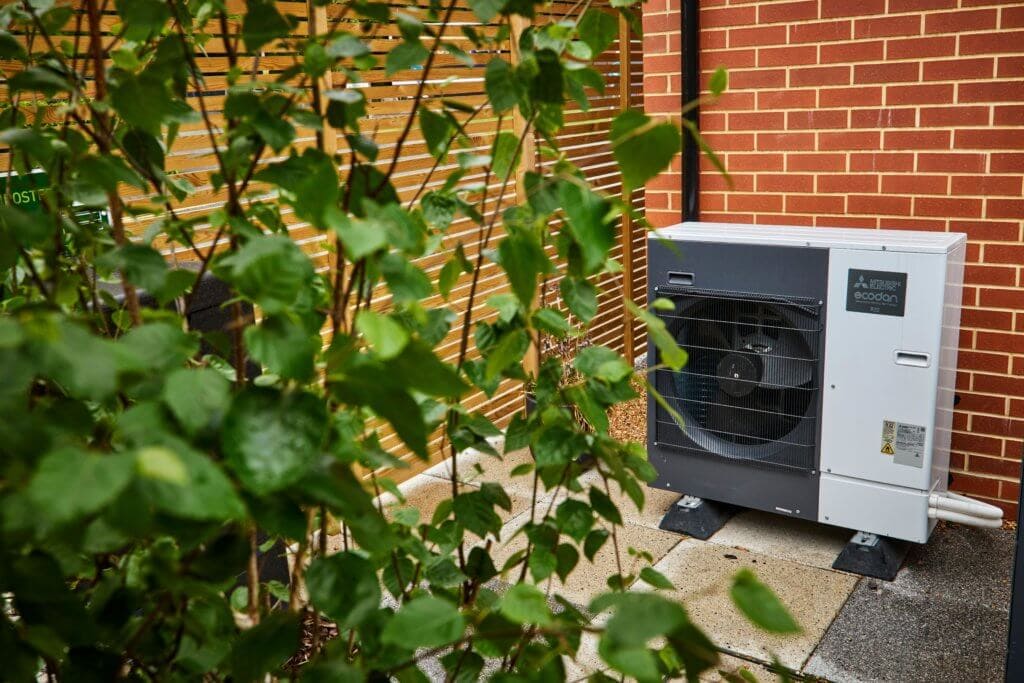
In May, major reforms under the government’s Warm Homes Plan removed a longstanding barrier: the requirement to apply for planning permission when installing heat pumps within one metre of a property boundary. Replacing a boiler is usually done when the previous boiler fails, so to have to wait for a planning approval is not something many have time for. This move alone has slashed the percentage of installations needing approval from 30–40% down to just 5–10%.
The legislation also now covers air-to-air systems, which offer both heating and cooling, granting them the same permitted development status as air-to-water systems. The maximum allowable size of air-source heat pump units has also more than doubled, allowing more powerful and efficient systems to be installed without special permission. Also, detached properties can now have up to two heat pumps installed under permitted development rights, which is ideal for larger properties or those wanting hybrid heating setups.
Whilst there have been several changes, noise limits remain in place, and modern installations must comply with updated guidelines, including a 42-decibel cap at the nearest neighbour’s window and adherence to MCS 020a standards.
There are a number of measures being introduced in order for the uptake in heat pumps to become more widespread. Under the Boiler Upgrade Scheme (BUS) households can access grants up to £7,500, with 0% VAT on eligible heat pump equipment until 2027. There is a consultation taking place for a proposed £200 annual energy bill discount for heat pump users as part of the Warm Homes plan, and around 5,500 extra heat pump installers are being trained through government grants.
From 2027, the Future Homes Standard will effectively ban gas boilers in newly built homes. Instead, heat pumps and solar panels will become mandatory, reducing carbon emissions and saving homeowners around £530 annually.
Love them or hate them, we can see that there is a real drive to make heat pumps easier to install and they are certainly going to become common place in the not too distant future.
It is important to consider if a heat pump is right for your property and whether you need to take other steps before installing a heat pump. Always start by increasing insulation in roofs, walls and floors where possible, reducing the energy demands. You should also consider how the heat pump might heat your home. Often standard radiators associated with a gas or oil boiler are not suitable and may need to be changed to larger ones to run at a lower temperature.
It’s never quite as simple as replacing a gas boiler with a heat pump and it’s important to get professional advice from someone impartial. Take a look at the Energy Saving Trust website for further guidance.