New Primary School Extension on Former Air Base Starts On Site

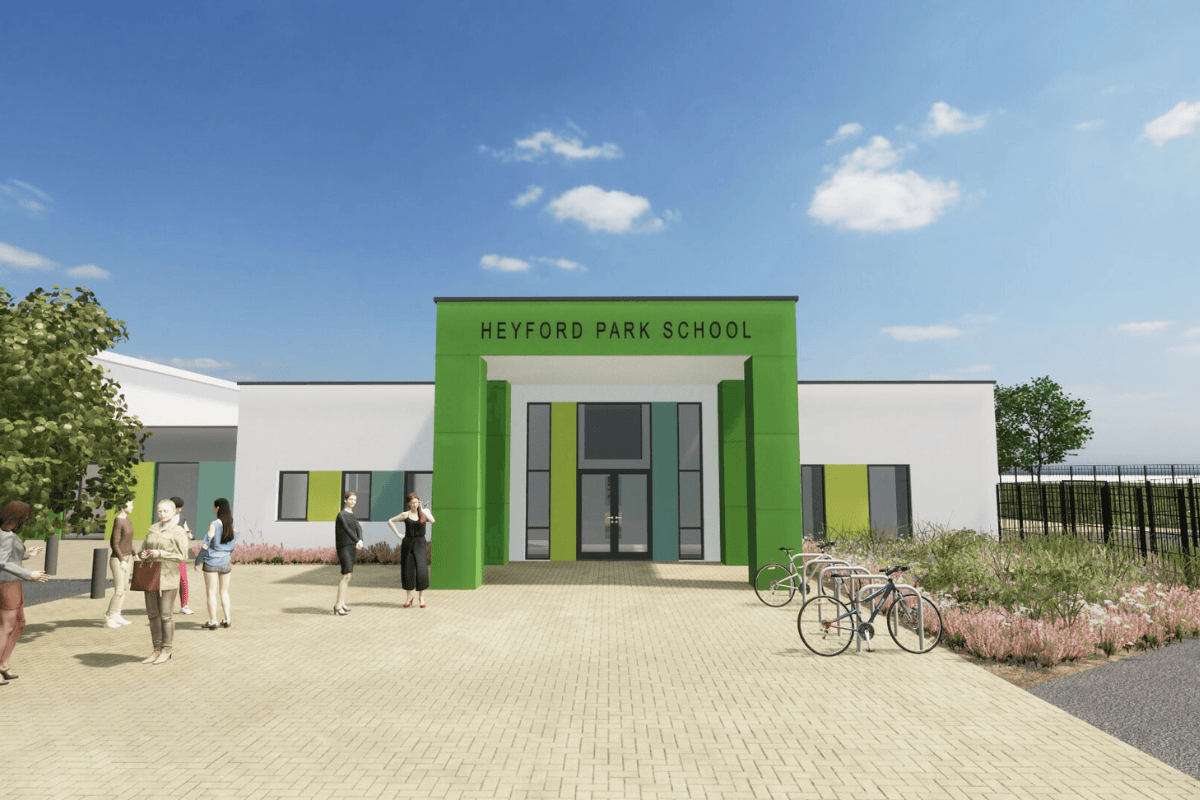
This Easter, the works to provide a new primary school building at Heyford Park School in Upper Heyford north Oxfordshire, start on site. This is always an exciting time for us! It’s the culmination of several years of work for us and our colleagues in adjacent disciplines, while also being the start of a new team when the contractor joins us for the scheme. Luckily, the contractor for this scheme is Edgar Taylor Construction, who we have worked with on a number of projects, and we already have an excellent working relationship with.

The first challenge will be when we actually start digging, often a point in a project that can throw up unexpected challenges. On this site potentially more than most, as Upper Heyford was originally established as a military base first for the RAF and then the United States Air Force. Our site, thankfully, isn’t within the actually bombing practice ranges and it has all been surveyed and planned for, with toolbox talks for the contractor, but this adds a bit of different spin to those first few weeks.

We’ll continue to update as this scheme progresses.

Badgers And Planning Applications…And Why They’re Not To Be Badgered!

At Thinking Buildings, we routinely work through the many technical considerations that come with securing planning permission, and protected species are often part of that picture.

Badgers are legally protected in the UK, and any potential disturbance to their setts requires careful assessment. As part of a recent project, we were asked to provide an ecological survey after signs of possible badger activity were identified on site. Working with our specialist ecology partners, we carried out the necessary investigations to ensure the planning application is fully supported and compliant with wildlife legislation.

These surveys play an important role in responsible development. They help us understand how a scheme might interact with the local environment, minimise impacts on protected species, and ensure planning decisions are informed and robust.

If you’re preparing a planning application and think your project may involve ecological considerations, from badgers to bats, we’re well placed to help guide you through the process and coordinate the required assessments.

Taking the time to get it right at the outset not only protects local wildlife but also helps maintain a smooth path through planning.

Celebrating International Women’s Day

Ahead of International Women’s Day this Sunday, we just wanted to give some recognition to the great women we have working in our team here at Thinking Buildings.

Rachel, is an architect and our resident Passivhaus expert.  Bethan, is also an architect and an Associate.  Jess, is one of our architectural technologists currently working towards her CIAT accreditation and Amanda, our office manager, is studying hard for a post graduate diploma.  Outside of work, Rachel is a great footballer, playing with Banbury United Women’s team.  Bethan is creative and enjoys working with ceramics.  Jess is a devoted dog Mum to puppy Eider and Amanda loves to sing.

This is not to say that we don’t value all the members of our team equally, but it is recognised that globally, women carry out 76% of unpaid care work and spend 2.5 times more hours on domestic responsibilities than men while still carry the majority of the “mental load” such as planning childcare, household management, and family logistics.

Today we celebrate those contributions and the women who make them every day, alongside our wonderful women here at Thinking Buildings.

Embracing AI In Visualisations

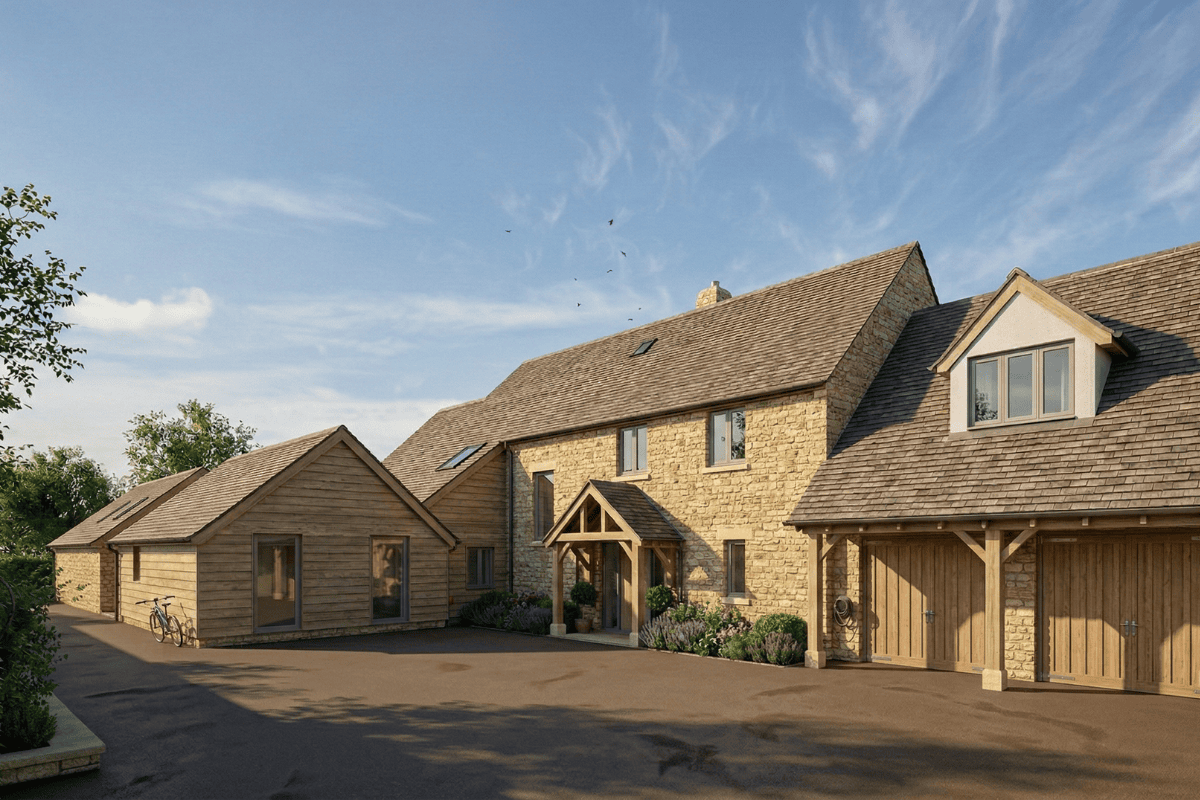
At Thinking Buildings we are always looking for new ways to explore and communicate design ideas. We have recently been developing the use of AI in combination with our existing design software to produce high quality render images that bring projects to life.

We start with ArchiCAD, which is our main design tool for modelling buildings in 3D. ArchiCAD allows us to build accurate models with the right proportions and spaces, while also setting out basic materials and forms. From there, we take the model into Twinmotion, which enhances materials, adds realistic lighting, and creates a stronger sense of atmosphere. Twinmotion is great for quickly producing engaging visuals that can be shared with clients at early stages of design.

The final step is the use of AI, which can generate photo realistic images based on the underlying model and materials. This technology allows us to test ideas rapidly, explore different design options, and produce visuals that are almost indistinguishable from photographs. AI helps us go beyond traditional rendering, creating a powerful tool for concept development, design exploration, and producing realistic imagery that helps clients and stakeholders truly understand a project’s potential.

We see this as an exciting evolution in how we present architecture, opening up new opportunities for collaboration and creative exploration. If you would like to see how AI-enhanced visualisations can help your project, contact us to discuss how we can bring your ideas to life.